Tag guide

Strategy tags

Tags are competitive research leads: describable strategies expressed as queries. Use strategy: when a plan matters, direct filters when a single move or ability matters, and is: when a form or typing flag matters.

Every tag below has its own page listing every Pokémon that holds it. Prefer to start from a name? Browse the full roster.

Start Here

Start with strategy tags like strategy:intimidate-pivot, strategy:incidental-speed-boost, or strategy:anti-trick-room when you want ideas. Use direct filters like move:"fake out", ability:intimidate, or m:(pivot) when the requirement is exact. Counts and previews use the current 315-entry Champions dataset.

SyntaxUseExample
strategy:nameDescribable strategy expressed as a query.strategy:intimidate-pivot
s: / st: / tag:Short aliases for strategy: (t: stays type:).tag:spread-attacker
tag + filtersCombine tags with normal search filters.strategy:spread-attacker type:flying
raw filtersUse direct predicates for single tools.move:"fake out" ability:intimidate m:(pivot)
-tagExclude a strategy tag or flag.strategy:spread-attacker -is:mega

Strategy tags

Tempo

Lead and pivot plans that trade actions for positioning advantage.

Tips

  • Use raw move and ability filters for single tools, such as move:"fake out", ability:intimidate, or m:(pivot).
  • Use strategy: when the plan combines multiple tools or requires specific stats.
  • Suggested queries on each tag are meant to reveal partners, counters, and adjacent ideas.

Fast Fake Out

19 matches
strategy:fast-fake-out

Fake Out is priority +3, so every user flinches the target before it moves — Speed has nothing to do with that. What 100+ Speed buys is the mirror: when both sides lead Fake Out, the faster one lands it and the slower one is flinched. It also means the same Pokémon outspeeds most neutral-priority answers on the following turn.

Aliases: fakeout-lead, fake-out-lead
Strategy tags

Support Plans

Partner protection, healing, and board support strategies.

Tips

  • Use raw move and ability filters for single tools, such as move:"fake out", ability:intimidate, or m:(pivot).
  • Use strategy: when the plan combines multiple tools or requires specific stats.
  • Suggested queries on each tag are meant to reveal partners, counters, and adjacent ideas.
strategy:friend-guard-support

Friend Guard multiplies by 0.75 every hit the ALLY takes — from either foe, any move, all game, with no turn spent and nothing to set up. It does nothing whatsoever for the holder, which is why it only makes sense next to something you intend to keep alive. Two roster entries carry it, and the effect is flat: it does not scale with the holder's bulk, so a frail Friend Guard user protects a partner exactly as well as a sturdy one.

strategy:ally-boost-support

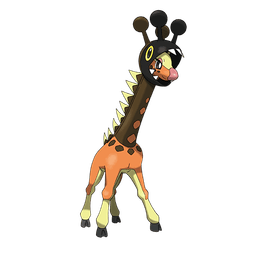
Spends its turn making the PARTNER stronger rather than itself. Howl raises the user's and the ally's Attack by one stage; Coaching gives the ally +1 Attack and +1 Defense; Aromatic Mist gives it +1 Sp. Def. Worth knowing what is deliberately not here: Helping Hand is a one-turn damage multiplier rather than a stat change, Dragon Cheer raises the ally's crit ratio (which is not a stat), and Acupressure picks its stat at random.

strategy:substitute-courier

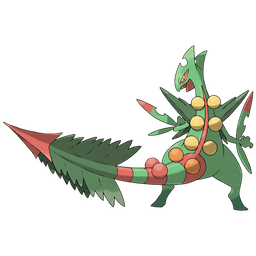
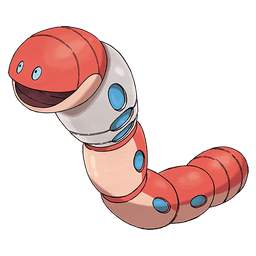
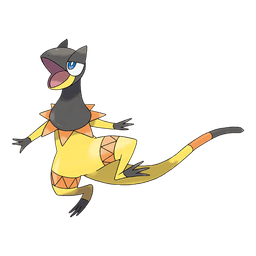
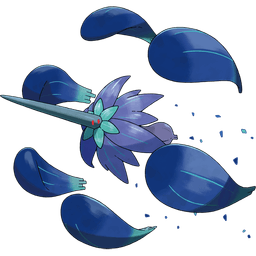
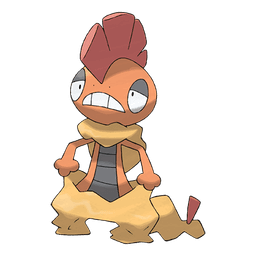
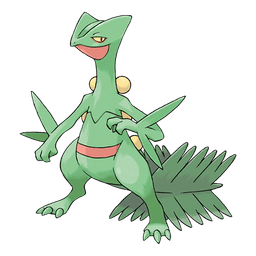
Shed Tail costs the user half its maximum HP to leave behind a Substitute worth a quarter of it, then switches out — the incoming teammate inherits the Substitute and gets a completely free turn to set up behind it. Only four roster entries learn it (Sceptile, Mega Sceptile, Heliolisk, Orthworm), and it fails outright if the user would faint paying the cost. Stat boosts do not transfer; for those see boost-courier.

Strategy tags

Offensive Plans

Damage plans defined by specific stat, move, or Ability requirements.

Tips

  • Use raw move and ability filters for single tools, such as move:"fake out", ability:intimidate, or m:(pivot).
  • Use strategy: when the plan combines multiple tools or requires specific stats.
  • Suggested queries on each tag are meant to reveal partners, counters, and adjacent ideas.

Spread Attacker

44 matches
strategy:spread-attacker

Carries two or more foes-only spread moves (Rock Slide, Heat Wave, Muddy Water, Dazzling Gleam…) at 75+ BP and 85%+ accuracy, backed by 100+ in that move's own attacking stat. Foes-only is the point: Earthquake, Surf and Discharge hit your ally too, so they need an immune partner rather than a free click — see the friendly-fire Interaction Techs for those. Two moves rather than one is what separates a game plan from a coverage slot.

Setup Sweeper

55 matches
strategy:setup-sweeper

A boost move that raises an attacking stat it actually has (95+), in either of the two shapes that win games. Compounding — the move raises offense and Speed (Dragon Dance, Quiver Dance, Shell Smash, Shift Gear, Tidy Up, No Retreat, Clangorous Soul…), so every turn you hit harder and move sooner. Or offense-only on a slow body (45 or less Speed): Swords Dance, Nasty Plot, Calm Mind, Belly Drum, Curse — outside Trick Room that is the worse move, but inside it the Speed boost would have been wasted anyway and being slow is the advantage. Curse is the purest case: it deliberately lowers your Speed. (For a Ghost type Curse is a completely different move — half your HP to curse the foe, no Attack boost — so Ghosts do not qualify on it.)

strategy:incidental-speed-boost

Speed that costs no turn. Either a rider on a STAB attacking move it was clicking anyway — Flame Charge, Trailblaze, Rapid Spin — or an ability that accrues Speed on its own: Speed Boost every turn, Weak Armor and Steadfast and Motor Drive off what the opponent does. Agility, Rock Polish and Dragon Dance are deliberately excluded: they cost the turn, which is the opposite of this claim (Dragon Dance lives in setup-sweeper). STAB matters because Trailblaze on a non-Grass type is a 50 BP move nobody actually runs.

Aliases: speed-setup, self-speed-boost, free-speed, boost-on-hit

Boost Courier

47 matches
strategy:boost-courier

Baton Pass transfers the user's stat boosts to whichever teammate switches in, so the boost outlives the Pokémon that set it up. It qualifies by learning Baton Pass plus a boost worth receiving — a move raising Attack, Sp. Atk or Speed by two or more stages (Swords Dance, Nasty Plot, Shell Smash, Belly Drum, Tail Glow, Shift Gear, Agility, Rock Polish…), or an Ability that stacks one by itself (Speed Boost, Weak Armor). Defensive setup is left out because a receiver rarely cashes in a passed Cotton Guard. Shed Tail is a separate tag — it passes a Substitute, not stat boosts.

Aliases: baton-pass-setup, baton-pass

Body Press Wall

28 matches
strategy:body-press-wall

Body Press is a 80 BP Fighting move that calculates with the user's Defense stat instead of its Attack — so the more it is built to survive, the harder it hits, and Iron Defense doubles as a Swords Dance. Gated on 100+ Defense that also exceeds its own Attack, because on a Pokémon that already punches harder than it walls, Body Press is just a worse Fighting move.

strategy:gyro-ball-abuser

Gyro Ball's power is inversely proportional to the user's Speed — the slower it is relative to the target, the harder it hits, up to 150 BP. Its low Speed stops being a weakness and becomes the damage roll. Gated on 50 or less Speed with 90+ Attack, so the claim is about a Pokémon that can actually convert it. Reads naturally with trick-room-attacker: the same stat line wins both plans.

strategy:huge-power-nuke

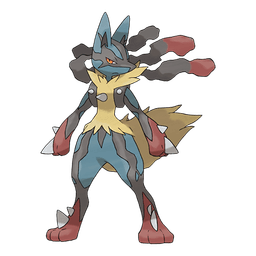
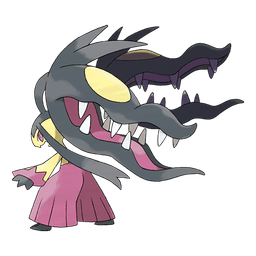
Huge Power and Pure Power double the Attack stat outright, which is why a Pokémon with an unremarkable Attack number can hit like a legendary. Azumarill's 50 Attack becomes an effective 100 before any boost, and Mega Mawile's 105 becomes 210. This is one of the four things the query language cannot say — atk>= reads the base stat, and the doubling happens after — so the tag is the only way to browse it.

Aliases: doubled-attack, huge-power, pure-power

strategy:type-converting-attacker

Pixilate, Aerilate and Refrigerate turn this Pokémon's Normal-type moves into Fairy, Flying or Ice, and add 20% power on top. The consequence players miss is that it applies to every Normal move: Hyper Voice becomes a spread Fairy attack, and Return, Body Slam and Explosion all change type too — so the coverage on paper is nothing like the coverage in practice. The conversion is invisible to type: queries, which read the move's printed type.

strategy:ko-chaining-sweeper

Moxie raises Attack by one stage every time this Pokémon knocks something out, so a sweep compounds: each KO makes the next easier. Gated on 90+ Attack that is also its better offensive stat, because the boost is worthless to a special attacker — the role-fit rule in AGENTS.md, and the reason Pyroar (68 Atk / 109 SpA) is not here despite having Moxie.

Strategy tags

Counterplay

Ways to stop Trick Room, setup, screens, priority, and other common plans.

Tips

  • Use raw move and ability filters for single tools, such as move:"fake out", ability:intimidate, or m:(pivot).
  • Use strategy: when the plan combines multiple tools or requires specific stats.
  • Suggested queries on each tag are meant to reveal partners, counters, and adjacent ideas.
strategy:symmetric-stat-reset

Haze erases every stat change on the field in one move — the opponent's Dragon Dance and your own Calm Mind alike, because it targets all active Pokémon. That symmetry is the whole point: it is the answer you bring when nothing on your side was going to set up anyway, and the one you must not pair with your own sweeper.

Aliases: clear-stats, stat-reset-support

Phazer

44 matches
strategy:phazer

Roar, Whirlwind, Dragon Tail and Circle Throw force the target out, and everything it had set up leaves with it — boosts, Substitute, Focus Energy. That is a different answer from symmetric-stat-reset: phazing costs the opponent their turns rather than resetting the field, and it cannot touch your own side. Gated on bulky (280+ HP+Def+SpDef) because these moves are negative priority — you take the boosted hit first, then send it away.

strategy:boost-ignoring-wall

Unaware ignores the opponent's stat changes in both directions: their Swords Dance does not increase the damage this Pokémon takes, and their Iron Defense does not reduce the damage it deals. A setup sweeper's entire plan is stat boosts, so a bulky Unaware body answers one by making the boosts irrelevant rather than by removing them — no turn spent, nothing to play around. Gated on above-average bulk (255+ HP+Def+SpDef) because ignoring boosts only helps a Pokémon that survives the unboosted hit.

Strategy tags

Status Pressure

Reliable status plans with enough speed or bulk to apply the status.

Tips

  • Use raw move and ability filters for single tools, such as move:"fake out", ability:intimidate, or m:(pivot).
  • Use strategy: when the plan combines multiple tools or requires specific stats.
  • Suggested queries on each tag are meant to reveal partners, counters, and adjacent ideas.

Strategy tags

Field Plans

Weather and terrain plans for changing the battle's operating conditions.

Tips

  • Use raw move and ability filters for single tools, such as move:"fake out", ability:intimidate, or m:(pivot).
  • Use strategy: when the plan combines multiple tools or requires specific stats.
  • Suggested queries on each tag are meant to reveal partners, counters, and adjacent ideas.
strategy:trick-room-setter

Under Trick Room the SLOWEST Pokémon moves first for five turns, which is what turns a 30-Speed nuke into the fastest thing on the field. The catalogue named who attacks under it (trick-room-attacker) and who stops it (anti-trick-room) from the beginning, and never named who puts it up. This is capability, not a set: the move is a common enough TM that running it is a choice, and the tag says only that the choice is available.

strategy:terrain-surge

Electric, Grassy, Misty or Psychic Surge sets its terrain automatically the instant this Pokémon switches in — no turn spent, no move slot used, and nothing the opponent can Taunt. That guarantee is what separates it from learning the terrain move: a Surge ability wins the terrain war by arriving.

Terrain Setter

96 matches
strategy:terrain-setter

Learns a terrain move (Electric Terrain, Grassy Terrain, Misty Terrain, Psychic Terrain) to power up moves, block status, or shut off priority for five turns. It costs a turn and a move slot, and it can be Taunted or simply outsped by the other terrain — which is exactly why terrain-surge is the stronger version of the same plan.

Aliases: terrain-support

Strategy tags

Defensive Plans

Long-game recovery, contact effects, trapping, and hazard control.

Tips

  • Use raw move and ability filters for single tools, such as move:"fake out", ability:intimidate, or m:(pivot).
  • Use strategy: when the plan combines multiple tools or requires specific stats.
  • Suggested queries on each tag are meant to reveal partners, counters, and adjacent ideas.
strategy:intimidate-resistant-sweeper

A physical attacker (90+ Atk — the stat Intimidate actually drops) whose ability ignores stat drops — Clear Body, White Smoke, Full Metal Body, Hyper Cutter… — so Intimidate can't weaken it. Defiant and Competitive are deliberately NOT here: the drop still lands, they just answer it with +2 — that play is intimidate-punisher.

strategy:prankster-immune

Dark types cannot be hit by a status move that Prankster gave priority to — the boosted Taunt, Encore, Thunder Wave or Will-O-Wisp simply fails. It is a typing fact rather than an ability or a move, which is exactly why it is worth a tag: type:dark will show you the same 32 Pokémon and never tell you why Dark is the answer to a Prankster lead.

Aliases: blocks-prankster-support, blocks-prankster, prankster-proof

strategy:indirect-damage-immune

Magic Guard blocks every source of damage that is not a direct attack: entry hazards, burn and poison chip, sandstorm and hail, Leech Seed, Curse, recoil, and Life Orb. It does not block the attack itself, and it does not block the status — a burned Magic Guard Pokémon still has its Attack halved, it just takes no damage from the burn. This is the -immune naming in its strict sense: nothing is spent and nothing is done, the chip simply never lands.

strategy:thrives-on-status

For these four Abilities a status condition is an upgrade, not a problem. Guts adds 50% Attack while statused AND ignores burn's own Attack cut, so a burned Guts attacker hits harder than a healthy one. Quick Feet adds 50% Speed and ignores paralysis' Speed cut the same way. Marvel Scale adds 50% Defense. Poison Heal turns poison damage into healing. It inverts the usual read of an opposing Will-O-Wisp or Thunder Wave — and of your own Facade.

Aliases: status-fueled

Strategy tags

Niche Leads

Rare searchable roles with explicit move, Ability, and stat requirements.

Tips

  • Use raw move and ability filters for single tools, such as move:"fake out", ability:intimidate, or m:(pivot).
  • Use strategy: when the plan combines multiple tools or requires specific stats.
  • Suggested queries on each tag are meant to reveal partners, counters, and adjacent ideas.

Endeavor Lead

21 matches
strategy:endeavor-lead
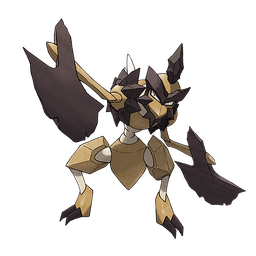
Endeavor sets the target's HP to the user's own — so from 1 HP it drags anything healthy down to 1 too, whatever its bulk and whatever it just did. Getting to that 1 HP is what a Focus Sash is for, which is why the gate is not an Ability but a BODY: fast enough (90+ Speed) to act on turn one, frail enough (260 or less bulk) that surviving at 1 HP is the expected state rather than a surprise, and carrying its own priority move to finish the foe before it heals or switches out.


Aliases: sturdy-endeavor-lead, endeavor-sweeper